Is a Wasp Nest Under Your Porch Eaves Safe to Remove?
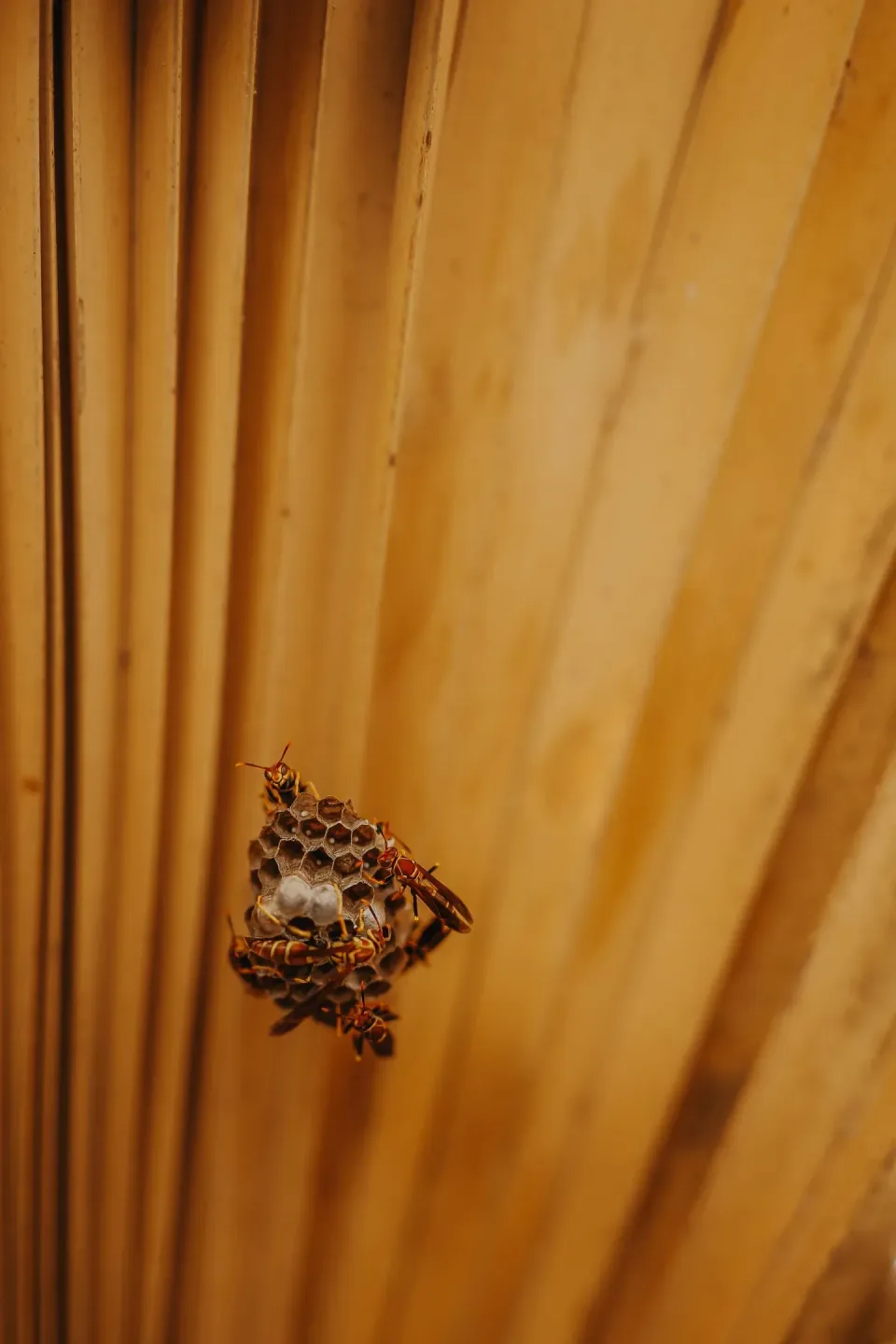
A wasp nest under porch eaves is too risky for DIY removal when reaching it requires a ladder, the nest is large or hidden, or wasps are actively defending it. Do not spray from below and then climb toward the nest; a startled swarm can turn a routine job into a fall or sting emergency. Nebraska’s summer storms can damage rooflines and siding, leaving loose trim or awkward access around the nest.
A caller who says, “I need somebody to come out and kill them,” may be focused on immediate relief, but safe removal starts with identifying the nest and access risks. Another caller hoping for help with ants is dealing with a different pest; that distinction matters because treatment must match the target.
Our crew inspects the eaves and explains a plan before work. Take a photo from a safe distance, then keep people away.
When does a porch-eave nest make DIY unsafe?
If the nest is above a doorway, beside a window, or tucked behind trim, avoid disturbing it yourself. The same goes for any job that requires a ladder, working overhead, or spraying into a gap you cannot see.
Wasps may emerge from an unseen opening while you are close to the eave, and climbing down quickly with a tool in hand increases the chance of a fall. Keep children and pets indoors and mark off the approach without blocking an exit.
Our field check looks at where wasps enter, how people use the porch, and whether the nest can be reached safely. A quick glance from the ground can miss a second opening. Do not seal an active entrance before the source is addressed; that can redirect wasps into another opening or an occupied space.
What does the Bob Kerrey bridge teach about access?
If the eave sits over steps or a frequently used walkway, keep that route clear of people and leave the treatment to someone equipped to work at the site.
A nest may also be partly hidden by soffit material. In that case, spraying only the visible surface can miss the point of entry. Our inspection checks the visible nest and nearby gaps before we recommend a method. We explain what we found and what access the job requires rather than guessing from a phone description.
Does the fall boxelder-bug season change your decision?
Fall cooling can bring boxelder bugs together on sunny walls. That seasonal pattern is a separate pest issue, not evidence that a cluster on siding is a wasp nest. If insects are gathering near an eave, observe from indoors or at a safe distance; a clear photo can help with identification, but do not poke or spray an uncertain cluster.
Homeowners near the Historic Haymarket District in Lincoln may see different building details than someone near Memorial Stadium, but the practical question is the same: can you identify the pest and reach the nest without disturbing it? If not, do not proceed. We use inspection findings to distinguish the target before choosing a treatment, so the plan addresses the actual insect and location.
When should you call a pro instead of DIY?
Call for professional help if the nest is high, hidden, close to a doorway, or associated with repeated wasp traffic through a wall or soffit. Leave the area if anyone has a history of severe sting reactions, or if wasps are already swarming. Do not use a ladder while holding a spray can, and do not assume that knocking down a visible nest removes wasps using a concealed entry.
Nebraska Pest Solutions uses inspection and pest identification to explain the recommended approach and follow-up. People traveling I-80 may pass the Great Platte River Road Archway near Kearney, but at home the key is simpler: avoid disturbing the nest until you know where it is and how it can be accessed safely. Our team can assess the site and discuss a practical next step.
Which Wasp Nest Option Fits Your Porch?
Choose based on whether you need an active nest addressed or want a broader inspection; the safest method depends on nest location and access. A porch-eave nest is not a reason to use equipment intended for another pest.
Near Chimney Rock National Historic Site, outdoor conditions differ from a shaded porch in eastern Nebraska; seasonal humidity varies across the state, so site observations matter more than a one-size approach. Eugene T.
Mahoney State Park is a useful local reference for outdoor activity, but a home treatment still needs to account for the structure. The Platte River corridor also reminds us that local surroundings differ; ask the technician to explain the specific site plan.
| Option | Best for | Key detail |
|---|---|---|
| Wasp nest inspection | Identifying eave activity | Confirms pest and access points before treatment |
| Professional nest treatment | Active nest in a risky location | Method depends on nest position and safe access |
| DIY from ground level | Only a clearly accessible, small, identified issue | Do not use a ladder or disturb a hidden nest |
| Follow-up inspection | Wasps still entering after treatment | Timing follows activity and inspection findings |
How Should You Prepare for Wasp Nest Service?
Wasps are entering a nest beneath the porch roof, and the route below it is used by family members. Keep the area clear and tell the technician exactly where you have seen activity.
-
Describe the location: Note which eave, doorway, or porch corner has wasp traffic, and share a photo taken from a safe distance.
-
Block access to the area: Keep children and pets away from the porch without trapping anyone inside or obstructing an exit.
-
Report past attempts: Tell the technician about sprays, knocked-down material, or other products already used.
-
Check for storm damage: Nebraska’s severe thunderstorms and tornadoes can damage rooflines; mention loose trim or other changes that affect safe access.
-
Follow treatment instructions: If a product is used, follow its label directions for people and pets, including any re-entry instructions.
-
Agree on follow-up: Ask what signs to watch for and when the technician wants to reassess activity.
Before scheduling, confirm the nest location and ask what access the crew needs.
Get a Safe Plan for Your Porch-Eave Nest
A wasp nest beneath porch eaves is not a DIY project if it is high, hidden, near a busy entrance, or requires a ladder. Keep your distance and have the nest identified before anyone applies a product. Winter freezes push rodents toward heated buildings, a different seasonal concern that can make inspection of nearby openings useful while discussing broader pest issues.
Our crew will inspect the wasp activity, explain the recommended treatment, and outline follow-up. Contact Nebraska Pest Solutions or review our Wasp Nest Removal service to discuss the next step.